-
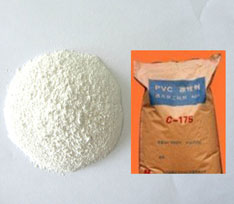
ACR-175 Lubricating PVC Processing Aid
Product Definition
WSD CHEMICAL ACR-175 is a medium-molecular-weight lubricant-type acrylic processing aid, purpose-built for rigid and semi-rigid PVC manufacturing workflows. It is engineered to resolve long-standing production pain points including uneven PVC fusion, excessive extruder torque, frequent die buildup, inconsistent surface finish, and extended molding cycles that most standard processing aids cannot fully address.
Unlike general-purpose ACRs that only focus on accelerating fusion, ACR-175 balances efficient plasticization promotion and mild, non-migrating internal lubrication. It integrates seamlessly with common PVC additive systems such as Ca-Zn composite stabilizers, methyl tin mercaptide, stearates, paraffin wax, MBS impact modifiers and CPE 135A, making it a versatile upgrade formulation component for UPVC pipes, profiles, foamed boards, calendered sheets and injection-molded fittings.
Advantages
1. Controllable Fusion Promotion: Shortens PVC resin plasticization time by 20%–30%, ensures homogeneous melt state across the entire production line, eliminates un-melted white spots, flow marks and fisheyes, and significantly improves the consistency of finished product batches.
2. Balanced Lubrication Effect: Delivers moderate internal lubrication during the high-temperature shearing phase, effectively reduces friction between PVC melt and screw/barrel inner wall, cuts extruder current consumption by 12%–18%, and lowers long-term equipment wear.
3. High Melt Strength Performance: Enhances PVC melt tensile property and shape retention, minimizes sagging of thick-wall extrudates, reduces die swell, and helps manufacturers achieve stable high-speed continuous production.
4. Excellent Compatibility with Foaming Systems: Works perfectly with ACR-401 and ACR-530 foaming regulators, promotes uniform cell nucleation, forms fine and closed-cell structure, and stably reduces the density of PVC foamed boards while maintaining sufficient impact strength.
5. Low Migration & No Surface Defects: No blooming, no precipitation, no negative impact on product transparency and printability. It avoids the common problem of excessive lubricant leading to post-processing adhesion and poor secondary processing performance.
6. Wide Process Tolerance: Adapts to conical twin-screw extrusion, single-screw extrusion, calendering, blow molding and injection molding processes, and maintains stable performance even under fluctuating equipment speed and temperature parameters.
Technical Specifications
Item
Value
Appearance
Uniform white free-flowing powder
Volatile Content
≤ 0.8%
Ash Content
≤ 0.15%
Sieve Residue (0.45mm mesh)
≤ 1.0%
Vicat Softening Point
≥ 58℃
Application Fields
· UPVC potable water & drainage pressure pipes, electrical conduits and injection molded pipe fittings
· PVC window and door profiles, exterior wall siding, interior wall panels and suspended ceiling boards
· PVC free-foamed boards, advertising display panels, cabinet substrates and WPC products
· Calendered PVC rigid sheets, blister packaging sheets and high-gloss decorative films
· Special modified PVC products requiring low energy consumption and high surface quality
Recommended Usage
Taking 100 phr PVC resin as the calculation benchmark, the standard recommended addition range is 0.4–2.2 phr. For high-output extrusion lines, foamed products and high-transparency sheet scenarios, the dosage can be adjusted according to actual formulation configuration.
Packaging, Storage & Shelf life
Packaging Details: 25kg /bags,14tons’/20’GP
Storage Guidelines: Keep in a shaded, dry and well-ventilated indoor warehouse, away from direct sunlight and heat sources higher than 45℃.
Shelf life:18 months
WSD CHEMICAL Additive Matching Support
The WSD CHEMICAL technical team with 20+ years of PVC industry experience can provide free targeted formulation debugging suggestions based on your equipment parameters, product standards and existing additive combinations.
When you select ACR-175, we can also provide a full set of coordinated additive solutions covering impact modifiers, heat stabilizers, lubricants and foaming agents, to help you avoid formulation compatibility risks, reduce supplier management costs, and achieve stable and low-cost long-term production.
Frequently Asked Questions (FAQ)
Q1: What is ACR-175 Lubricating PVC Processing Aid?
A: ACR-175 is a medium-molecular-weight lubricant-type acrylic processing aid, purpose-built for rigid and semi-rigid PVC processing, to balance efficient plasticization promotion and mild, non-migrating internal lubrication.Q2: What core production pain points can ACR-175 solve?
A: It effectively addresses common issues including uneven PVC fusion, excessive extruder torque, frequent die buildup, inconsistent surface finish and extended molding cycles that most standard processing aids cannot fully resolve.Q3: What typical application scenarios is ACR-175 suitable for?
A: It works perfectly for PVC foaming pipes, sheets, boards, profiles and other rigid PVC products, helping you achieve more stable long-run production and better finished product appearance.Q4: What is the recommended addition level in PVC formulations?
A: For most rigid PVC systems, the standard recommended dosage is 1.0–2.0 phr per 100 phr of PVC resin, and you can fine-tune the amount according to your equipment type and actual production requirements.Q5: How does ACR-175 perform in compatibility with common PVC additive systems?
A: It integrates seamlessly with Ca-Zn composite stabilizers, methyl tin mercaptide, stearates, paraffin wax, PE wax and other conventional PVC additives, without causing formulation incompatibility issues.Q6: What unique advantages does ACR-175 have over general-purpose ACR processing aids?
A: Unlike ordinary ACRs that only focus on accelerating fusion, ACR-175 combines plasticization promotion and mild non-migrating lubrication. It can reduce the total usage of external lubricants and lower the risk of surface precipitation.Q7: What are the key technical specifications of ACR-175?
A: It appears as a white free-flowing powder, with volatile content ≤1.5%, 40-mesh sieve rate over 99.0%, apparent density 0.35–0.55 g/cm³, and it meets the general industrial grade standards for rigid PVC processing.Q8: What processing benefits can ACR-175 bring to long-term continuous production?
A: It helps reduce frictional heat inside the extruder, lowers dynamic thermal degradation risk, extends continuous operation cycle, reduces die cleaning frequency, and effectively improves overall production efficiency and product consistency.



Whatsapp :
+86 138-5857-5598
 Languages