

Whatsapp :
+86 138-5857-5598
 Languages
Languages
Languages

We are your reliable full-technical-support partner for PVC compound formulation and stable mass production. Backed by WSD CHEMICAL’s 20+ years of deep experience in PVC raw material matching, processing parameter optimization and on-site production troubleshooting, we deliver a fully verified, end-to-end system covering formulation design, compounding process control, performance consistency improvement and finished product defect resolution. Our goal is to help you produce uniform, high-performance PVC compounds that perfectly match your downstream extrusion, injection and calendaring requirements.
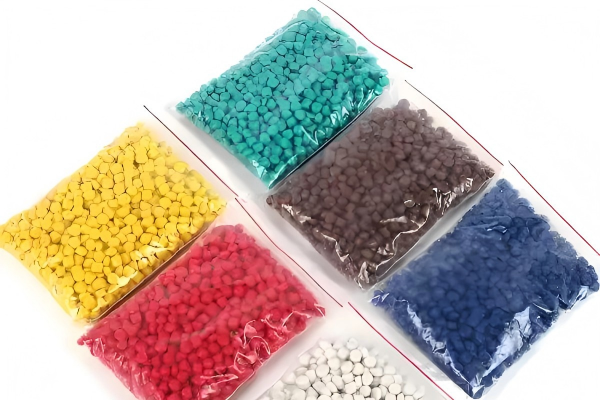
PVC compound is a pre-mixed granular or powdery material formulated from PVC resin, heat stabilizers, processing aids, impact modifiers, lubricants, fillers and colorants according to specific application needs. It can be directly used for downstream processing without complicated secondary mixing, greatly improving production efficiency and batch consistency. WSD CHEMICAL-classified main PVC compound categories and their core advantages are as follows:
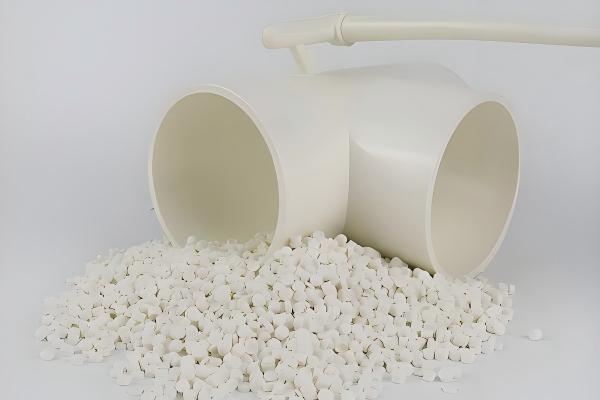
Rigid PVC Compound: High hardness, excellent dimensional stability, good chemical resistance, widely used for UPVC pipes, fittings, profiles, plates and injection parts.
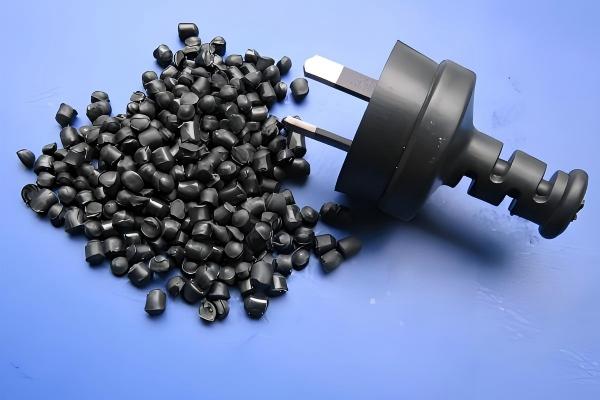
Flexible PVC Compound: Good low-temperature flexibility, excellent electrical insulation, easy to color and form, suitable for wire and cable insulation, hoses, sealing strips and toy materials.
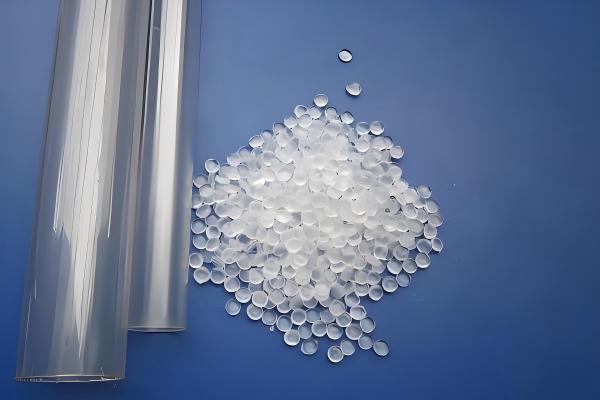
Transparent PVC Compound: High clarity, low haze, stable thermal processing performance, ideal for transparent sheets, packaging films and transparent profile products.
WSD CHEMICAL’s technical team has accumulated rich on-site service experience in helping compounding factories and end-product manufacturers optimize material flow, plasticization effect and final physical properties for different application scenarios.
WSD CHEMICAL provides scenario-specific raw material and auxiliary matching solutions tailored for PVC compound production:
PVC Resin Series: SG-3, SG-5, SG-8(S1300,S-1000,DG-700) suspension PVC resins with stable K value range, selected according to different hardness and processing methods.
Heat Stabilizer Series: Environment-friendly calcium-zinc stabilizer, high-efficiency methyltin stabilizer, lead-based stabilizer for special industrial scenarios, precisely matched according to processing temperature and product regulatory requirements.
Processing Aid Series: WSD-401, WSD-20, WSD-530,WSD-90 which effectively promote uniform plasticization, improve melt fluidity and enhance product surface smoothness.
Impact Modifier Series: CPE 135A,AIM, MBS, to significantly improve the low-temperature impact strength and notch toughness of rigid PVC compounds.
Functional Additives: Titanium dioxide for weather resistance and whiteness, GCC/PCC as filler, stearic acid, PE wax and paraffin wax for internal and external lubrication balance.
WSD CHEMICAL provides 3 sets of widely verified, stable production formulas for your reference:
SG-8 PVC resin: 100kg
Ca/Zn stabilizer: 4.2-5.0kg
ACR-401: 1.8-2.2kg
CPE 135A: 5-7kg MBS: 2-3kg
Stearic acid: 0.4-0.6kg
PE wax: 0.2-0.4kg
Light calcium carbonate: 10-20kg
Rutile titanium dioxide: 2-3kg
SG-3 OR SG-5 PVC resin: 100kg
Ca/Zn stabilizer: 3.0-3.8kg
DOP plasticizer: 35-45kg
Epoxidized soybean oil: 3-5kg
Stearic acid: 0.3-0.5kg
Paraffin wax: 0.2-0.3kg
Heavy calcium carbonate: 15-25kg
Titanium dioxide anatase/rutile: 1-2kg
SG-5 PVC resin: 100kg
Methy ltin stabilizer: 2.0-2.5kg
MBS impact modifier: 6-8kg
ACR-175: 1.2-1.8kg
Stearic acid: 0.2-0.3kg
PE wax: 0.1-0.2kg
Methyl methacrylate processing aid: 0.5-1.0kg
Transparent filler: 2-5kg
WSD CHEMICAL sorts out clear, actionable operation specifications for PVC compound production:
High-speed mixing process: Control final mixing temperature at 120-135℃, total mixing time 10-12 minutes. Discharge and cool the material below 40℃ immediately to avoid material agglomeration and component segregation.
Twin-screw extrusion granulation: Barrel temperature gradient set at 130-175℃; die temperature controlled at 160-175℃. Ensure uniform plasticization and avoid local overheating leading to material yellowing.
Screw speed & feeding rate: Keep stable and synchronized, adjust according to current and torque feedback to guarantee consistent material residence time.
Pelletizing & cooling: Use water-ring or strand pelletizing system; control cooling water temperature at 25-35℃ to ensure uniform pellet size and prevent pellets from sticking together.
Screening & packaging: Remove fine powder and oversized particles before packaging to ensure uniform particle size of finished PVC compound.
WSD CHEMICAL summarizes frequent pain points in PVC compound production and provides direct solutions:
Q: PVC compound batches show inconsistent color and unstable hardness?
A: Check the accuracy of raw material weighing; verify whether the mixing time and final temperature are consistent; ensure the feeding system is free of material residue and cross-contamination.
Q: Compounding process produces yellow lines or black spots on pellets?
A: Clean the screw and die flow channel thoroughly; appropriately reduce the local temperature of the feeding section; check if the heat stabilizer dosage matches the processing temperature.
Q: Downstream extrusion products have poor surface gloss and uneven plasticization?
A: Adjust the lubrication balance system of the formula; increase the appropriate amount of WSD CHEMICAL ACR processing aid; optimize the downstream extruder temperature and screw speed matching.
Q: Flexible PVC compound becomes hard after long-term storage?
A: Check the volatility and compatibility of the plasticizer; adjust the proportion of epoxidized soybean oil and stabilizer; control the moisture content of the filler below 0.3%.
If you have special requirements for PVC compound hardness, transparency, weather resistance, flame retardancy or encounter difficult production problems, WSD CHEMICAL’s technical team with over 20 years of PVC material experience can provide one-to-one targeted guidance, covering custom formulation development, compounding process optimization and downstream processing parameter matching. We help you quickly launch stable, high-quality PVC compound products that meet your market demands.