

Whatsapp :
+86 138-5857-5598
 Languages
Languages
Languages

We are your full-process dedicated technical partner for PVC & WPC foam product manufacturing. With WSD CHEMICAL’s deep expertise in PVC foam formulation and WPC material technology, we deliver a complete, verified system covering raw material matching, foam density control, cell structure optimization, surface finish enhancement and common defect troubleshooting. All our support is designed to help you achieve stable, high-quality foam products with consistent low density and excellent surface smoothness.
PVC foam products (board, profile, pipe) and WPC foam products (wood-plastic composite foam board) are lightweight, rigid and highly customizable materials, widely used in construction, decoration, furniture, packaging and industrial applications. Key advantages include:
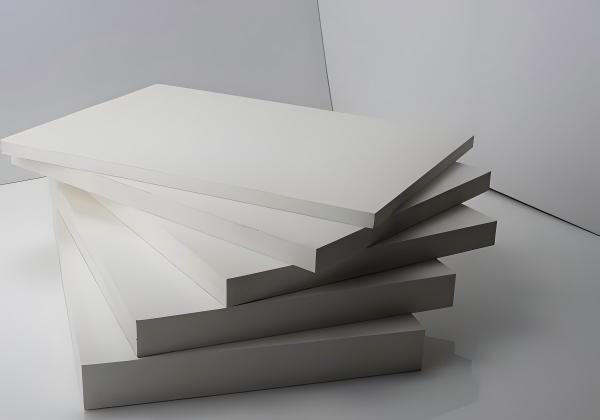
PVC Foam Board/Profile: Low density, excellent surface smoothness, good heat insulation, easy machining and lamination, suitable for advertisement boards, architectural cladding, interior decoration and exhibition displays.
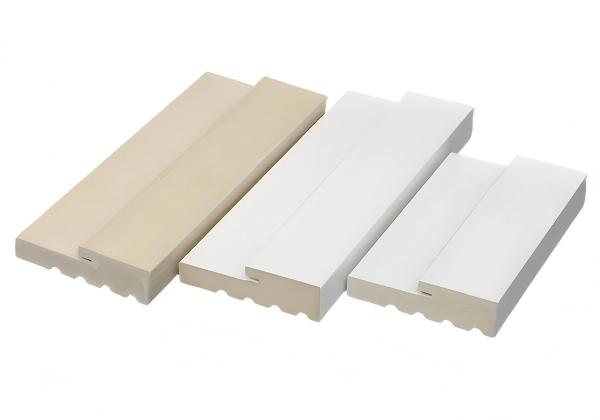
WPC Foam Board: Combines the natural appearance of wood fiber with the durability of plastic, featuring improved UV resistance, moisture resistance and dimensional stability, ideal for outdoor decking, wall panels and furniture components.
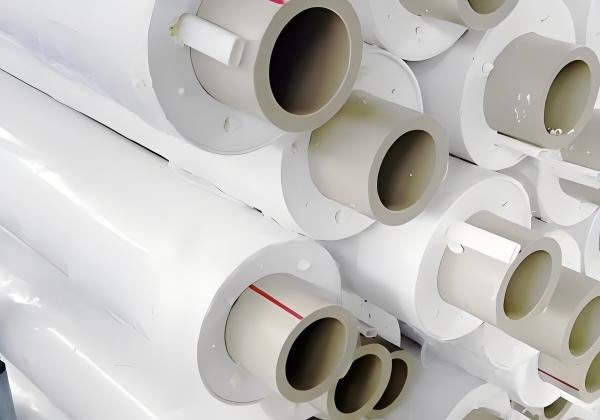
PVC Foam Pipe: Lightweight, good thermal insulation, low thermal conductivity, commonly used in drainage, ventilation and insulation sleeves.
WSD CHEMICAL has extensive on-site experience in helping manufacturers optimize foam density, cell uniformity and surface quality for these product lines.
WSD CHEMICAL provides foam-specialized raw material and auxiliary matching solutions:
Foam Regulator Series: WSD CHEMICAL’s high-efficiency acrylic foam regulator WSD-90, which significantly enhances melt strength, ensures uniform and fine closed-cell structure, and prevents foam collapse or surface sagging during extrusion.
Processing Aid Series: ACR processing aid ACR-401, Acrylic processing aid ACR-175, which improve melt flow balance, accelerate plasticization and enhance surface gloss.
Impact Modifier Series: CPE 135A, AIM impact modifier, which improve the low-temperature toughness and drop impact resistance of foam products.
Heat Stabilizer Series: Calcium-zinc stabilizer,Lead based PVC stabilizer, matched for different foam density requirements and processing temperature ranges.
Functional Additives: Titanium dioxide (for whiteness and UV resistance), calcium carbonate (as filler and nucleating agent), lubricants (stearic acid, PE wax,OPE Wax, G60) to ensure smooth extrusion.
WSD CHEMICAL provides 3 sets of widely applied, stable foam formulas for your reference:
K value 55-59 PVC resin: 100kg
Ca/Zn stabilizer: 4.0-4.8kg
WSD CHEMICAL’s PVC foam regulator WSD-90: 8-12kg
ACR processing aid ACR-175: 1.5-2.0kg
CPE 135A: 4-6kg
Lubricant G60: 0.3-0.5kg
PE wax: 0.2-0.3kg
OPE wax:0.5
Calcium carbonate (light): 50-75kg
Titanium dioxide rutile: 2-3kg
AC blowing agent : 0.4-0.5kg
NC blowing agent:1.1-1.3kg
PVC resin (K value 58-62): 60-70kg
Wood flour (60-80 mesh): 30-40kg
Ca/Zn stabilizer: 2.5-3.5kg
WSD CHEMICAL foam regulator WSD-90: 8-12kg
CPE 135A: 3-5kg
Lubricant G60: 0.5kg
PE wax: 0.2-0.4kg
OPE Wax:0.5kg
Calcium carbonate: 10-20kg
Titanium dioxide: 1-2kg
Foaming agent(AC/NC) 0.8-1.5kg
K value 66-68 PVC resin: 100kg
Ca/Zn PVC stabilizer:4-5kg
WSD CHEMICAL foam regulator WSD-90: 6-9kg
CPE 135A: 3-4kg
Stearic acid: 0.2-0.4kg
PE wax: 0.1-0.2kg
Calcium carbonate: 25-kg
Titanium dioxide: 1.5-2.0kg
Foaming agent(AC/NC): 0.4-1.0kg
WSD CHEMICAL sorts out clear, actionable operation specifications for foam extrusion:
Mixing process: Control final mixing temperature at 115-125℃, total mixing time 8-10 minutes. Cool material below 40-45℃ before use, and use within 24h to prevent moisture absorption affecting foaming.
Extrusion temperature setting: Barrel temperature gradient: 150-170℃; die temperature: 165-180℃. Avoid local overheating to prevent premature decomposition of foaming agent.
Screw speed & haul-off speed: Keep stable synchronization; adjust traction speed according to foam expansion ratio to control product density and dimensional stability.
Cooling & calibration: Use vacuum calibration tank, control vacuum degree at -0.05~-0.07MPa; cooling water temperature 20-30℃ to ensure uniform cooling and prevent warpage.
WSD CHEMICAL collects frequent foam production pain points and provides direct solutions:
Q: Foam density uneven, some areas dense and some areas over-expanded?
A: Check if the foaming agent is evenly dispersed during mixing; verify whether the extrusion temperature fluctuates too much; adjust the dosage of WSD CHEMICAL foam regulator WSD-90 to improve melt strength uniformity.
Q: Surface of foam board shows rough texture or visible large cells?
A: Increase the addition of WSD CHEMICAL foam regulator WSD-90; appropriately raise die temperature to improve melt flow; check if the calcium carbonate particle size is too coarse.
Q: Foam profile warps or twists after cooling?
A: Check if cooling is uneven; adjust the water temperature gradient of the calibration tank; verify whether the material plasticization is uniform.
Q: Foam pipe wall thickness inconsistent, local thinning?
A: Check if the die flow channel is blocked or worn; adjust the distribution of foaming agent; ensure stable screw speed and haul-off speed.
If you have special requirements for PVC/WPC foam product density, cell structure, surface effect or encounter difficult technical problems, WSD CHEMICAL’s technical team with over 20 years of foam product experience can provide one-to-one targeted guidance, covering formula optimization, process parameter adjustment and defect troubleshooting. We help you build a stable, high-yield foam production system rapidly.