-
WSD-90 PVC Foaming Regulator / Cell Control Agent
Product Overview
WSD-90 PVC foaming regulator from WSD CHEMICAL is a premium-grade, high-efficiency acrylic-based processing aid specifically engineered as a foaming regulator (cell control agent) for rigid and semi-rigid PVC foam extrusion and calendering. It is meticulously formulated to control melt rheology, significantly enhancing melt strength and elasticity during the foaming process. This ensures the formation of a uniform, fine, and closed-cell structure, which is critical for achieving lightweight PVC foam products with superior surface quality, excellent mechanical properties, and optimal thermal insulation performance.
Key Specifications
Core Features & BenefitsItem
Index
Test Method
Appearance
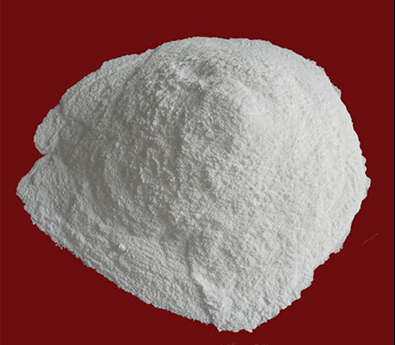
White, Free-Flowing Powder
Visual
Bulk Density
0.40 - 0.55 g/cm³
GB/T 3402
Volatile Content
≤ 1.0%
GB/T 2914
Particle Size
> 99% passes through 40 mesh
Sieve Analysis
Glass Transition Temp (Tg)
~ 100 °C
DSC
Superior Cell Structure Control: WSD CHEMICAL's WSD-90 promotes homogeneous cell nucleation and growth, resulting in a consistent, fine, and closed-cell foam structure. This minimizes open cells and prevents cell collapse, leading to a smooth, Class-A surface finish ideal for painting or lamination.
High Melt Strength & Elasticity: It dramatically increases the melt strength and elasticity of the PVC compound during foaming. This is essential for stabilizing the expanding gas bubbles, allowing for lower density foams (as low as 0.5 g/cm³) without compromising dimensional stability or causing blow-outs.
Enhanced Physical & Mechanical Properties: Foams produced with WSD-90 exhibit significantly improved impact strength, rigidity, and heat distortion temperature compared to unregulated foams. This translates to more durable end-products, such as furniture boards, decorative panels, and construction materials.
Excellent Compatibility & Processability: Fully compatible with all standard PVC resins, stabilizers (including WSD CHEMICAL's calcium-zinc and methyltin stabilizers), lubricants, and foaming agents (e.g., AC blowing agents). It ensures smooth processing, stable extrusion, and reduced die swell.
Wide Processing Window: Provides a broad and forgiving processing temperature window, giving operators greater control and reducing the risk of processing defects, thereby improving production yield and efficiency.
Primary Applications
PVC Foam Boards & Sheets: For advertising (PVC foam board), wall panels, ceiling panels, and decorative applications.
Foam Profiles: Window and door frames, furniture edges, skirting boards, and trim profiles.wall panels
Low-Density Structural Foams: Core materials for sandwich panels, lightweight partitions, and industrial applications.
Calendered Foam Sheets: For automotive interior trim, luggage, and specialty packaging.
Recommended Usage
Typical Dosage: 5 - 15 phr (parts per hundred resin).
Low-Density Foams (0.5-0.7 g/cm³): 8 - 15 phr
Medium-Density Foams (0.7-0.9 g/cm³): 5 - 10 phr
Processing Guidance: For optimal performance, it is recommended to pre-blend WSD-90 with PVC resin and other powder additives in a high-speed mixer. The optimal processing temperature range is typically between 170°C - 190°C. WSD CHEMICAL's technical team can provide precise formulation and process optimization support.
Packaging & Storage
Packaging: Standard packaging is 25 kg multi-layer paper bags with inner polyethylene liner. .
Storage: Store in a cool, dry, and well-ventilated warehouse away from direct sunlight, heat sources, and moisture. Keep bags sealed when not in use.
Shelf Life: 24 months from the date of production when stored under recommended conditions.
Safety & Handling
· General Handling: Use with adequate ventilation to avoid dust inhalation. Wear appropriate personal protective equipment (PPE) such as dust masks, gloves, and safety glasses during handling.
· Regulatory: This product is not classified as hazardous under GHS criteria. For detailed safety information, please refer to the Safety Data Sheet (SDS) provided by WSD CHEMICAL.
Frequently Asked Questions (FAQ)
Q1: What is PVC Foam Regulator WSD-90?
A: WSD-90 is an ultra-high molecular weight acrylic processing aid, specially developed to boost PVC melt strength, promote uniform plasticization, and support stable closed-cell structure formation in rigid PVC foamed products.
Q2: What core benefits can WSD-90 bring to PVC foaming production?
A: It effectively prevents bubble merging and collapse during foaming, delivers finer and more uniform cell distribution, lowers finished product density, and significantly improves the surface smoothness and mechanical properties of foamed items.
Q3: What typical applications is WSD-90 suitable for?
A: It is widely used in PVC OR WPC foamed boards, advertising decorative boards, foamed profiles, crust foamed door panels, and other high-performance rigid PVC foamed products that require stable foaming quality.
Q4: What is the recommended addition level of WSD-90 in standard formulations?
A: For most common rigid PVC foaming systems, the recommended dosage ranges from 4.0 phr to 8.0 phr. The specific amount can be adjusted according to your foaming ratio, equipment configuration and actual process requirements.
Q5: How does ACR-90 perform in compatibility with other PVC additives?
A: WSD-90 shows excellent compatibility with PVC resins, calcium-zinc stabilizers, internal and external lubricants, foaming agents and other common additives, and will not cause formulation compatibility issues under normal processing conditions.
Q6: What are the key technical specifications of WSD-90?
A: It appears as a white free-flowing powder, with characteristic viscosity of 10.5–16.5, apparent density of 0.35–0.55 g/cm³, volatile content ≤1.5%, and 30-mesh sieve residue ≤2.0%, meeting common industrial PVC processing standards.
Q7: What processing precautions should be noted when using WSD-90?
A: It is recommended to add it during the high-speed mixing stage together with PVC resin, control the high mixing final temperature above 110°C to ensure uniform dispersion, then cool the material down to around 40°C before discharging, to avoid uneven plasticization affecting foaming stability.



Whatsapp :
+86 138-5857-5598
 Languages