-
Acrylic Impact Modifier – All-Weather High-Performance Toughening Additive for Rigid PVC and Advanced Polymer Systems
Product Overview
Acrylic impact modifier is a high-performance all-acrylic graft copolymer with a precisely designed core-shell structure, developed as a dedicated functional toughening additive for outdoor-grade rigid PVC formulations and multi-polymer compounding systems. When integrated into properly optimized formulations, it significantly elevates long-term weather-resistant notched impact strength, maintains outstanding thermal processing stability, and delivers consistent dimensional integrity for high-value durable plastic products operating under continuous outdoor exposure.
As a specialized all-acrylic polymer modifier, it helps manufacturers eliminate the inherent brittleness of unmodified rigid PVC without sacrificing long-term service durability, delivering balanced mechanical performance, excellent multi-resin miscibility, and stable long-term service life for finished parts operating under harsh UV radiation, high temperature fluctuations, and extreme outdoor ambient conditions.
Key Features and Benefits
Weather-Focused Toughening Performance
Acrylic impact modifier forms a uniformly dispersed elastomer micro-phase "island" structure within the PVC matrix, dramatically increasing the notched impact strength of rigid PVC products. At typical recommended dosages, it converts brittle fracture behavior into ductile fracture, effectively preventing cracking during post-processing, on-site installation, and multi-year outdoor end-use while retaining stable mechanical properties and consistent surface appearance.
Fully Saturated Acrylic Molecular Design
The all-acrylic backbone structure of the modifier contains no unsaturated double bonds, eliminating the molecular degradation risk caused by long-term UV radiation and thermal oxidation. This proprietary design ensures modified rigid PVC maintains exceptional impact retention and anti-yellowing performance even after years of outdoor exposure, making it the ideal modifier for applications that require both high toughness and uncompromised long-term weatherability.
Broad Formulation Compatibility
Its PMMA-rich polar outer shell and crosslinked acrylic rubber inner core ensure outstanding miscibility with PVC, PET, PLA, PC, and other engineering and biodegradable polymer systems. No agglomeration or phase separation occurs during profile extrusion, calendering, or precision injection molding, supporting stable and consistent mechanical properties across mass production batches.
Reliable High-Temperature Impact Retention
With precisely controlled rubber phase content and optimized narrow particle size distribution, acrylic impact modifier retains excellent impact energy absorption capacity even at processing temperatures as high as 230°C. It eliminates the common high-temperature brittleness defect of unmodified rigid PVC during continuous processing, making formulations suitable for high-speed profile lines, WPC foamed products, and high-temperature engineering polymer compounding.
Processing Performance Optimization
Acrylic impact modifier promotes uniform stress transfer and smooth melt flow in polymer processing, reduces melt fracture, and improves surface smoothness of extruded profiles and calendered sheets. It adapts seamlessly to standard twin-screw extruders, high-speed profile extrusion lines, and large-scale calendering equipment, helping lower scrap rates for outdoor durable products and enhance continuous production efficiency.
Technical Specifications
Item
Index
Product Name
Acrylic Impact Modifier (Acrylate Graft Copolymer)
Chemical Classification
Core-shell structured all-acrylic graft copolymer
Physical Form
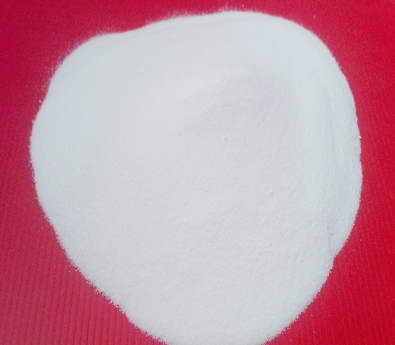
Free-flowing low-dust white powder
Apparent Density
≥ 0.42 g/cm³
Volatile Matter
≤ 0.8%
Thermal Decomposition Temperature
≥ 230°C
Rubber Phase Content
45%–75% (varies by specific grade)
Particle Size
98% passing through 0.5 mm (30 mesh) sieve
Total Ash Content
≤ 0.3%
Technical Documentation
Technical Data Sheet (TDS) and Safety Data Sheet (SDS) available upon request
Applications of Acrylic Impact Modifier
Acrylic Impact Modifier for Outdoor PVC Profiles and Siding
Widely used in PVC window and door profiles, exterior wall siding, outdoor fencing, and decorative exterior panels. At typical 4–6 phr addition, it ensures finished products maintain high impact strength and long-term UV stability while meeting strict multi-year weathering requirements for the global construction market.
Acrylic Impact Modifier for PVC Foaming and WPC Products
Applied in PVC foam boards, WPC decking, and low-density rigid foamed parts. At 5–7 phr recommended dosage, it boosts melt strength and uniform cell structure, preventing foamed products from cracking during cutting, transportation, and long-term outdoor service.
Acrylic Impact Modifier for General-Purpose High-Impact Rigid PVC
Suitable for opaque PVC pipes, electrical components, and industrial injection-molded parts where long-term thermal stability and consistent toughness are required. High rubber-content acrylic grades significantly improve notch impact strength at optimized cost, delivering excellent durability for infrastructure and industrial plastic components.
Acrylic Impact Modifier for Engineering and Biodegradable Polymer Toughening
Used in PC, PLA, PC/PBT, and their alloy compounding systems to offset the inherent notch brittleness of base resins. It maintains thermal deformation temperature while raising overall impact strength, supporting thin-wall part design and cost optimization without sacrificing final part long-term durability.
Acrylic Impact Modifier for High-Filled Rigid Modified Systems
Selected high-dispersion acrylic impact modifier grades can be used in highly filled rigid PVC formulations to balance heavy filler loading and impact performance. They compensate for the toughness reduction caused by high calcium carbonate addition while keeping processing stability at acceptable levels, supporting formulation cost optimization for large-volume durable products.
Packaging & Storage
Packaging: 25kg net weight per kraft paper bag with inner PE liner, 12–13 tons/20'GP
Storage: Keep in a cool, dry and well-ventilated warehouse, avoid direct sunlight and moisture
Shelf Life: 24 months under recommended storage conditionsHow to Select the Right Acrylic Impact Modifier
Choosing the correct acrylic impact modifier grade and determining the optimal addition level depends on your specific formulation system and processing conditions. Key selection factors include:
Target Application: Confirm whether the primary use is for outdoor PVC profile, WPC foamed product, high-filled rigid PVC, or engineering polymer toughening, as recommended dosage ranges differ significantly across scenarios.
Weathering Requirement: Define the expected outdoor service life and UV exposure intensity of finished products. Long-term exterior applications must select all-acrylic grades with fully saturated molecular structure, while general-purpose indoor high-impact scenarios can use cost-optimized grades for better cost performance.
Base Polymer Compatibility: Verify compatibility with your main resin system (PVC, PLA, PC, etc.) to ensure uniform toughening effect without affecting surface quality or mechanical properties.
Processing Equipment: Adjust addition level according to twin-screw extruder configuration, profile extrusion die design, calender roll structure, and continuous production speed.
Performance Requirements: If finished products need to pass strict QUV weathering test standards, high-temperature long-term processing requirements, or low-temperature impact standards, select a high-consistency grade with narrow core-shell particle size distribution.Frequently Asked Questions (FAQ)
Q:What is acrylic impact modifier?
Acrylic impact modifier is an all-acrylic core-shell structured weather-resistant impact modifier widely used in rigid PVC and multi-polymer formulations to boost notched impact strength while preserving excellent long-term UV stability and thermal durability.
Q:What is acrylic impact modifier used for?
Acrylic impact modifier is primarily applied in outdoor PVC window and door profiles, exterior siding, WPC foamed products, high-filled rigid PVC, and engineering/biodegradable polymer toughening systems. Its exact suitable scenarios depend on the specific grade’s rubber phase content and core-shell particle size distribution.
Q:What is the difference between all-weather acrylic impact modifier and general-purpose impact modifiers?
All-weather acrylic impact modifier features a fully saturated all-acrylic molecular backbone without unsaturated double bonds, delivering far superior UV resistance and long-term weathering performance compared to diene-based impact modifiers. It prioritizes multi-year outdoor durability and thermal stability, making it the preferred choice for products requiring long-term outdoor service life.
Q:How much acrylic impact modifier should be added to a formulation?
For outdoor PVC profile and siding, the typical recommended dosage range is 4–6 phr. For engineering polymer toughening systems, the usual addition level falls between 6–15 phr. The exact optimum value should be determined through lab formulation trials and verified under actual production processing conditions.
Q:How do I select a reliable acrylic impact modifier supplier?
Compare core technical parameter consistency, targeted application experience for your specific outdoor toughening scenario, batch-to-batch stability, complete available TDS and SDS documentation, stable bulk supply capacity, and professional formulation debugging technical support. Request samples and evaluate performance under your actual processing and testing standards before finalizing a long-term grade.
Q:Can acrylic impact modifier be blended with other processing additives in PVC formulations?
Yes, acrylic impact modifier can be safely combined with ACR processing aids, internal and external lubricants, calcium-zinc stabilizers, and inorganic fillers in well-balanced rigid PVC systems. It delivers dedicated impact toughening, while other additives optimize plasticization speed, melt flow, and long-term thermal stability without mutual interference.
Q:What is the typical shelf life and correct storage requirement for acrylic impact modifier?
Under recommended cool, dry, well-ventilated warehouse conditions away from direct sunlight and moisture, the standard shelf life of acrylic impact modifier is 24 months. After the shelf life expires, the material can still be used if it passes full re-inspection for impact modification performance and all relevant technical indicators.



Whatsapp :
+86 138-5857-5598
 Languages