

Whatsapp :
+86 138-5857-5598
 Languages
Languages

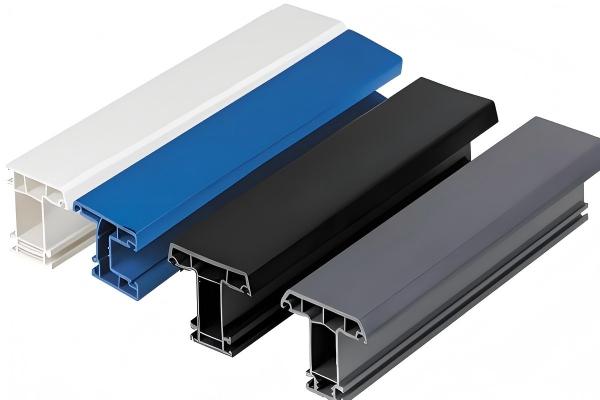
PVC Window & Door Profiles: A Complete Technical Empowerment Solution
WSD chemical is your full-process dedicated partner for high-performance PVC profile manufacturing. Backed by WSD CHEMICAL’s 20+ years of deep experience in PVC raw material matching, processing parameter optimization and on-site production troubleshooting we deliver a validated, end-to-end system covering raw material selection, formulation precision, process optimization, and defect-free production
PVC window and door profiles are engineered rigid profiles used in residential, commercial, and high-end architectural applications
Key Advantages:
High tensile and impact strength for wind load compliance
Excellent thermal insulation
Fully recyclable
Applications:
Premium residential windows, sliding doors, balcony enclosures, curtain wall systems, and passive house components
WSD CHEMICAL provides profile-optimized material systems—no foam agents, no expansion control—focused on rigidity, weldability, and surface fidelity.
Resin System:
S-PVC K65–K68—High molecular weight ensures melt elasticity, weld strength, and long-term creep resistance.
Stabilization System:
Ca Zn Stabilizer,Lead based PVC stabilizer(2.0–5.0 phr)
Impact Modification:
Acrylic impact modifier (3–5 phr) — Excellent impact resistance and weather resistance
CPE (3–10 phr)—Cost-effective alternative for non-transparent, non-structural profiles.
Processing Aids:
ACR-401(1.0–1.5 phr)—Enhances melt homogeneity, reduces surface streaks, improves extrusion rate.
Lubrication System:
Internal: Stearic acid (0.3–0.5 phr)—Reduces melt viscosity.
External: PE wax (0.1–0.2 phr)—Prevents die buildup, ensures smooth demolding.
Optical & Functional Additives:
Rutile TiO₂ (2.0–3.0 phr) — High hiding power, UV-resistant.
Optical Brightener OB-1 (0.02–0.03 phr)—Enhances whiteness without yellowing.
CaCO₃ (5–50 phr, 2.5μm avg.)—Nucleating agent for surface smoothness; avoids grittiness.
WSD CHEMICAL provides two, extrusion-validated formulations for standard and premium profiles.
Formula 1: Standard White Window Profile
PVC RESIN (K66-68) | 100KG |
Ca Zn Stabilizer/Lead based pvc stabilizer | 4.0KG |
CPE 135A Impact Modifier/AIM | 10.0/6.0KG |
ACR-401 Processing Aid | 1.5KG |
Stearic Acid | 0.3KG |
PE Wax | 0.2KG |
Rutile TiO₂ | 2.5KG |
Optical Brightener | 0.02KG |
Fine CaCO₃ (2.5μm) | 10-15KG |
Formula 2: High-Performance Door Profile (Reinforced)
S-PVC (K68) | 100 |
CaZn Stabilizer | 2.1 |
MBS Impact Modifier | 8.0 |
ACR-401 | 1.5 |
Stearic Acid | 0.5 |
PE Wax | 0.2 |
Rutile TiO₂ | 3.5 |
Optical Brightener | 0.1 |
Fine CaCO₃ | 6.0 |
Glass Fiber (1–2%, pre-compounded) | 1.5 |
WSD CHEMICAL’s extrusion protocols are field-tested across 12+ countries to ensure repeatability and defect minimization.
Mixing Process:
Hot mixing temperature: 110–115°C
Mixing time: 8–10 minutes
Cooling: 40-45°C before extrusion
Use within 24 hours to prevent moisture absorption → critical for weld integrity
Extrusion Temperature Profile (Typical Gradient):
Feed Zone: 160–165°C
Compression Zone: 170–175°C
Metering Zone: 180–185°C
Die Zone: 182–188°C
Avoid >190°C — prevents thermal degradation and black specks
Screw Speed & Haul-Off Control:
Screw speed: 12–18 rpm (dependent on profile complexity)
Haul-off speed: Matched to expansion ratio—target output rate: 1.5–2.5 m/min
Use closed-loop speed control to prevent dimensional drift
Cooling & Calibration:
Vacuum calibration tank: -0.04 to -0.06 MPa
Cooling water temperature: 20–25°C (stepwise gradient: 25°C → 22°C → 20°C)
Cooling length: ≥3.5m — ensures full crystallization and prevents warpage
WSD CHEMICAL’s field engineers resolve these top 5 profile defects daily.
Q: Weld corner strength below 3000 N?
A: Increase MBS to 7.5–8.0 phr; verify resin K-value ≥K68; ensure extrusion temperature >180°C in metering zone for full fusion.
Q: Surface has “orange peel” texture or low gloss?
A: Increase ACR-401 to 1.5 phr; check die temperature ≥185°C; confirm TiO₂ dispersion — use pre-compounded masterbatch if needed.
Q: Profile warps after cooling, especially in thick sections?
A: Adjust cooling gradient — reduce initial water temp to 18°C; extend cooling length by 0.5m; verify haul-off speed is synchronized with extrusion rate.
Q: Black specks or discoloration in extruded profile?
A: Check stabilizer dosage — must be ≥2.0 phr; inspect barrel/die for carbon buildup; reduce residence time by increasing screw speed (if not overloading).
Q: Color variation between batches?
A: Use pre-compounded pigment masterbatch; control mixing temperature ≤115°C; avoid regrind >5% in colored profiles.
WSD CHEMICAL’s Technical Innovation Team—with 20+ years in architectural PVC profile development—provides one-to-one engineering support,including:
Raw Material Selection: Help customers avoid detours and eliminate waste caused by blind trial and error.
Formulation Design: Shorten customers' new product development cycle by 30-50%.
Formulation Optimization: Reduce customers' comprehensive cost by 5-15%, while simultaneously improving product performance.
Production Troubleshooting: Minimize downtime losses and boost finished product yield.
Full Technical Support: Enable small and medium-sized customers to access the same level of formulation engineer services that large enterprises enjoy.