-
Stearic Acid
Product Overview
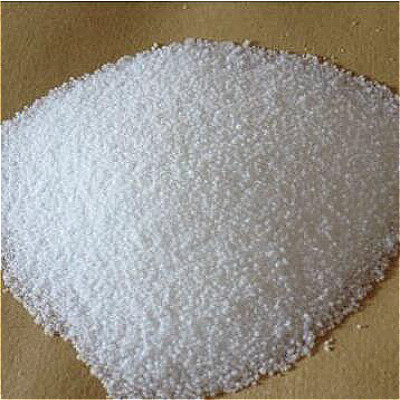
Stearic Acid, also known as Octadecanoic Acid (CAS No. 57-11-4), is a high-purity saturated long-chain fatty acid derived from natural animal and vegetable oils. It appears as white or slightly yellow granular/powdered solid with a faint fatty odor, featuring excellent thermal stability and uniform molecular distribution. As a multi-functional processing aid widely recognized in the global plastic, rubber, and chemical industries, it delivers consistent performance across diverse industrial manufacturing scenarios.
Key Specifications
Item
Index
Test Method
Appearance
White or slightly yellowish solid beads/flakes
Visual
Iodine Value (g I₂/100g)
≤ 2.0
ISO 3961
Acid Value (mg KOH/g)
200 - 210
ISO 660
Saponification Value (mg KOH/g)
202 - 212
ISO 3657
Titer (°C)
54 - 57
ISO 6321
Color (Lovibond 5¼” Cell)
≤ 2.0R, 20Y
ISO 15305
Unsaponifiable Matter (%)
≤ 1.0
ISO 3596
Moisture (%)
≤ 0.5
ISO 662
Ash (%)
≤ 0.1
ISO 3987
Core Functions & Performance
1. Dual Internal-External Lubrication for PVC Processing
Its polar carboxyl groups form excellent compatibility with PVC resin molecules, effectively reducing intermolecular friction inside the melt to improve melting fluidity. Meanwhile, the hydrogen bonding interaction between molecules optimizes external lubrication performance, avoiding sticking to molds and scorching issues during continuous production, and lowering equipment wear significantly.
2. Stable Processing Performance
Recommended dosage of 0.2–0.5 phr (per 100 parts of PVC resin) effectively prevents blooming on finished products, maintains the surface gloss and secondary processability of PVC sheets, pipes, profiles and films.
3. Multi-scenario Compatibility
It can be well compatible with other additives including stabilizers, PE waxes and processing modifiers, forming a balanced formulation system that optimizes overall production efficiency.
Main Application Areas
PVC Industry: Used as lubricant and release agent for PVC pipes, profiles, cables, transparent sheets and calendered films, improving product surface finish and processing continuity
Rubber Industry: Serves as vulcanization activator and softener in natural and synthetic rubber, enhancing the uniformity of rubber mixing and the surface texture of finished products
Chemical Manufacturing: Raw material for producing stearate salts including calcium stearate, zinc stearate, lead stearate and other metal soaps
Cosmetics & Personal Care: Applied in creams, lotions and cosmetics as emulsifier and texture regulator
Other Fields: Widely used in pharmaceutical ointment substrates, metal mineral flotation agents, waterproof coatings and polishing agents
Recommended Dosage for PVC plastics
The typical addition level ranges from 0.2 to 1.0 phr (parts per hundred resin), depending on the specific PVC formulation, processing method, and other lubricants present in the system.
· Low dosage (0.2-0.5 phr): Primarily for internal lubrication and synergy with stabilizers.
· Higher dosage (0.5-1.0 phr): When stronger external lubrication and mold release effects are required.
Note: Exceeding 0.5 phr may increase the risk of plate-out or blooming on the product surface. Formulation trials are recommended to determine the optimal dosage.Packaging & Storage
· Packaging: 25 kg net weight per kraft paper bag with inner polyethylene liner.17tons/20'GP
· Storage: Store in a cool, dry, and well-ventilated area away from heat sources, open flames, and incompatible materials (strong oxidizing agents, strong bases). Keep containers tightly closed.
· Shelf Life: 24 months from the date of manufacture when stored under recommended conditions.



Whatsapp :
+86 138-5857-5598
 Languages
Languages